I’m a sequential thinker. I like to know what the days have in store for me well in advance. Thus, I have planned our trip and projects in Kenya to a “T”. And what I have discovered is…plans change and it’ll be okay.
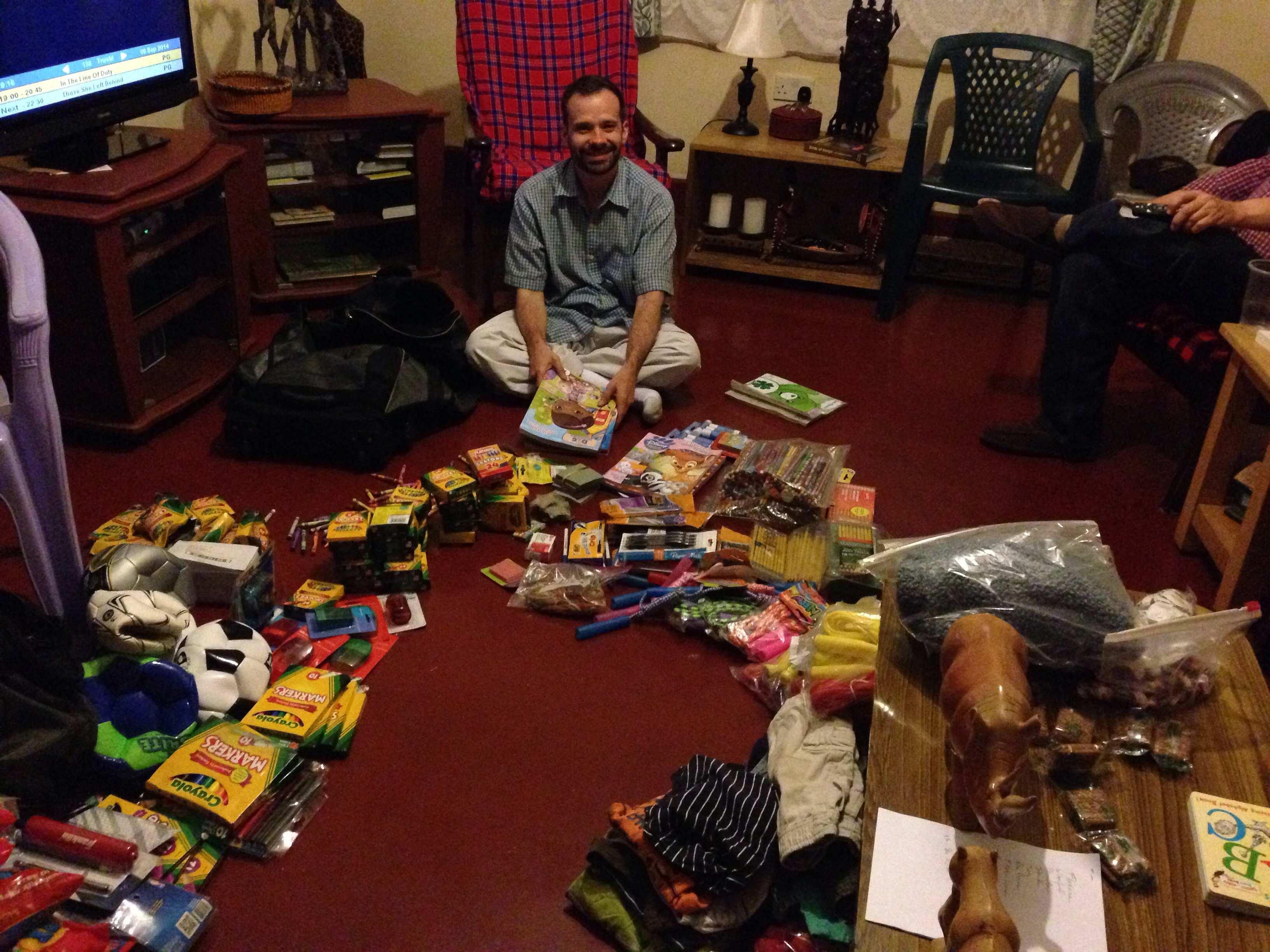
For example, we planned to deworm one school while we were in Kenya. My family honored us by giving generously over last Christmas so we could do so during the trip. In addition, my amazing coworkers, family, and friends donated more than 140 lbs of school supplies to take to the school we dewormed.
Well, when we got to Maua, it turned into three schools…with a visit to another to take some school supplies. So we split the supplies into four groups. We then found out we should visit and take supplies to another school…and on Friday we found we were to do an additional two more schools.
I was panicky at first, but found we had more than enough supplies, dum dum suckers for after the children received the deworm pill, and actual medications. And each school was in need of supplies. Over the course of the week, Tim and I helped to deworm 1,320 children and delivered supplies to six schools.
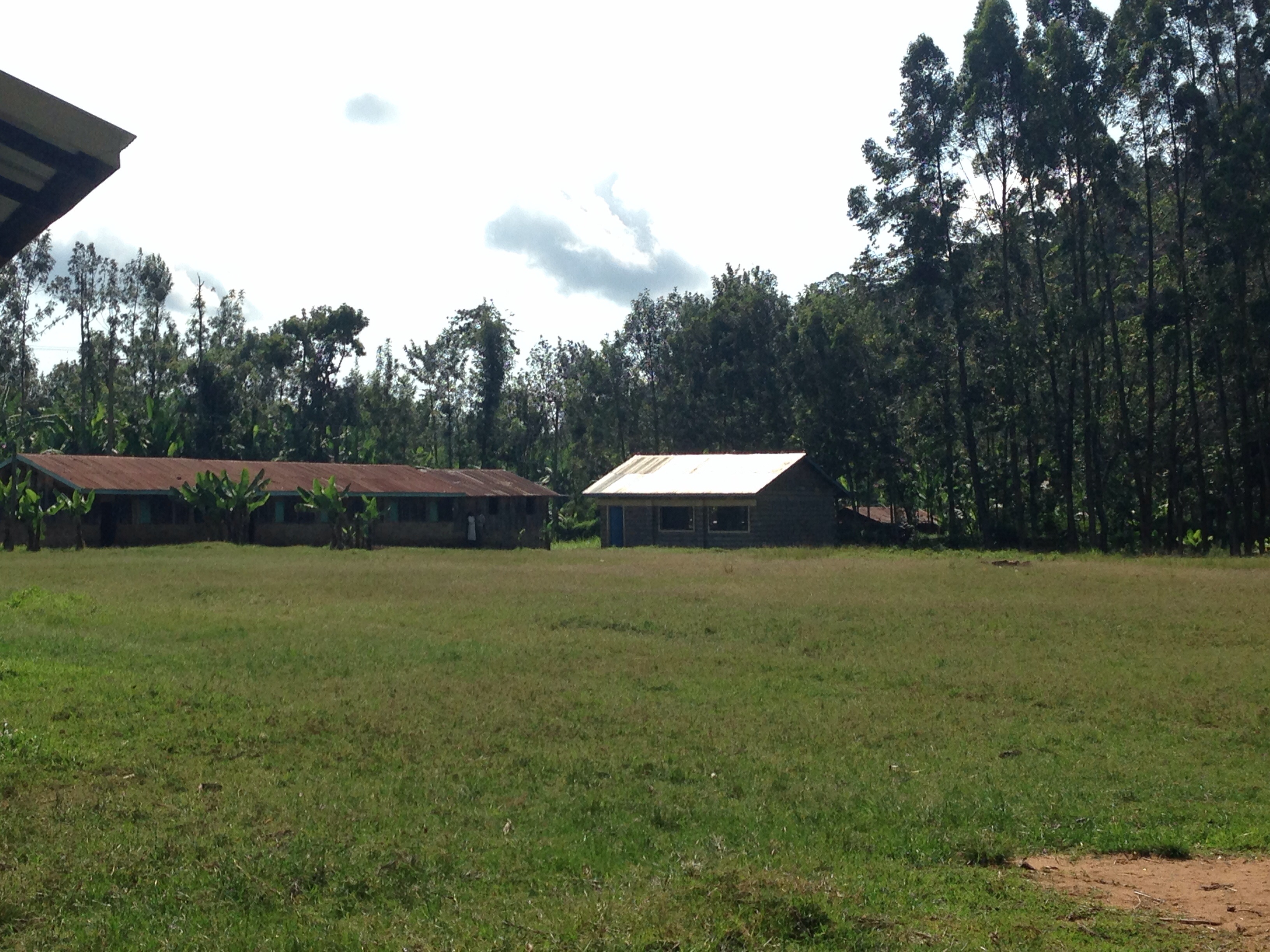
The first stop was Uraa, close to where we were building the house during the week. The school had about 435 children.
Worms are parasitic and affect children all over the world. It can be contracted a variety of ways- including walking barefoot on soil which many children do in Kenya. People may also get worms by drinking dirty river water or by putting dirty hands into mouth.
Our jobs were simple as dewormers. The Principal escorted us from class to class to explain why deworming was important, introduce ourselves, and then walk from student to student and hand them a pill to chew- followed by the sucker. Sue also helped to explain where we came from, our names, and why we were there.
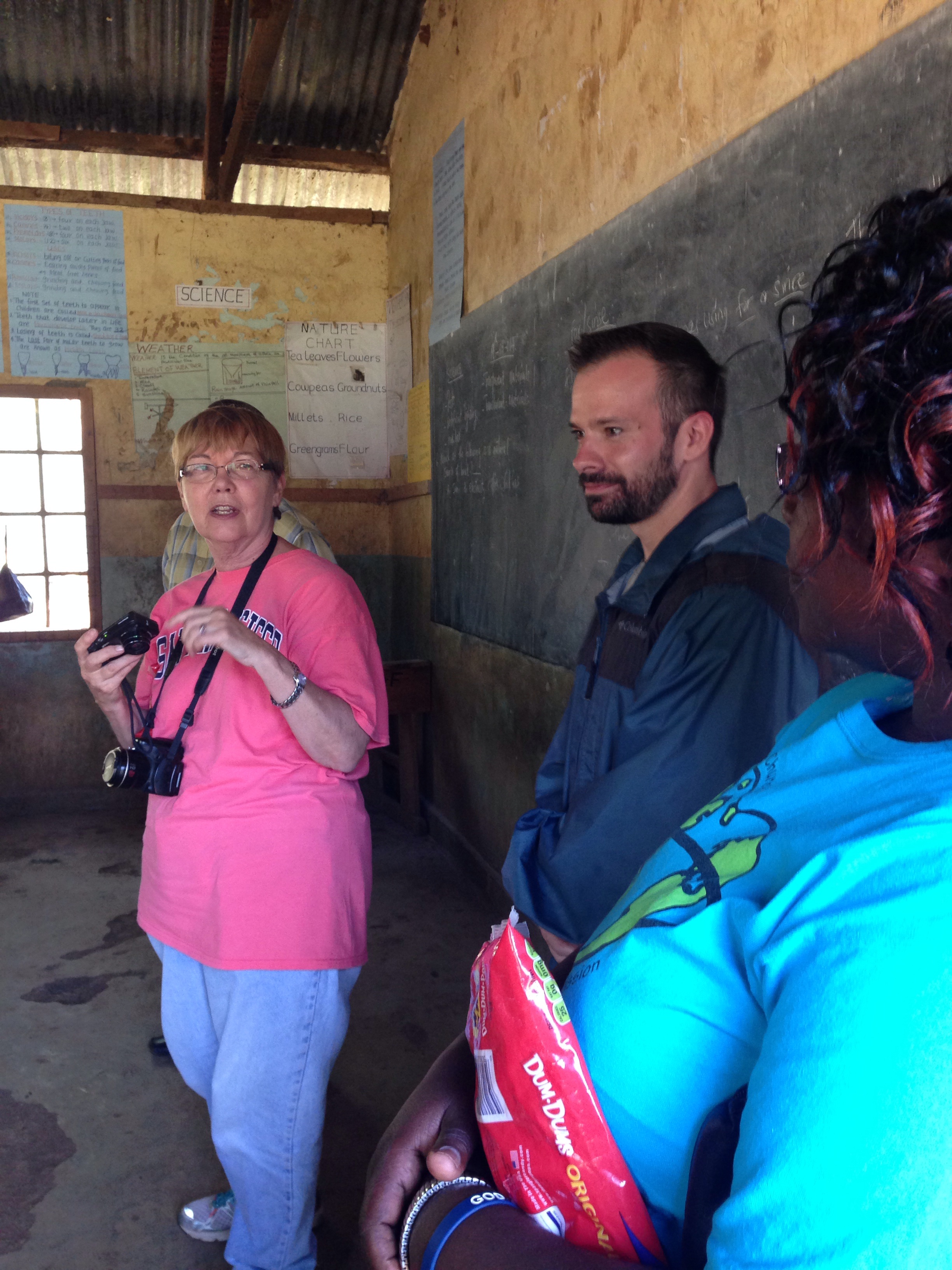
Each classroom at Uraa had about 25-40 children. We started with the older children who were in the equivalent to our eighth grade. The rooms were less crowded than I expected but still full of children.
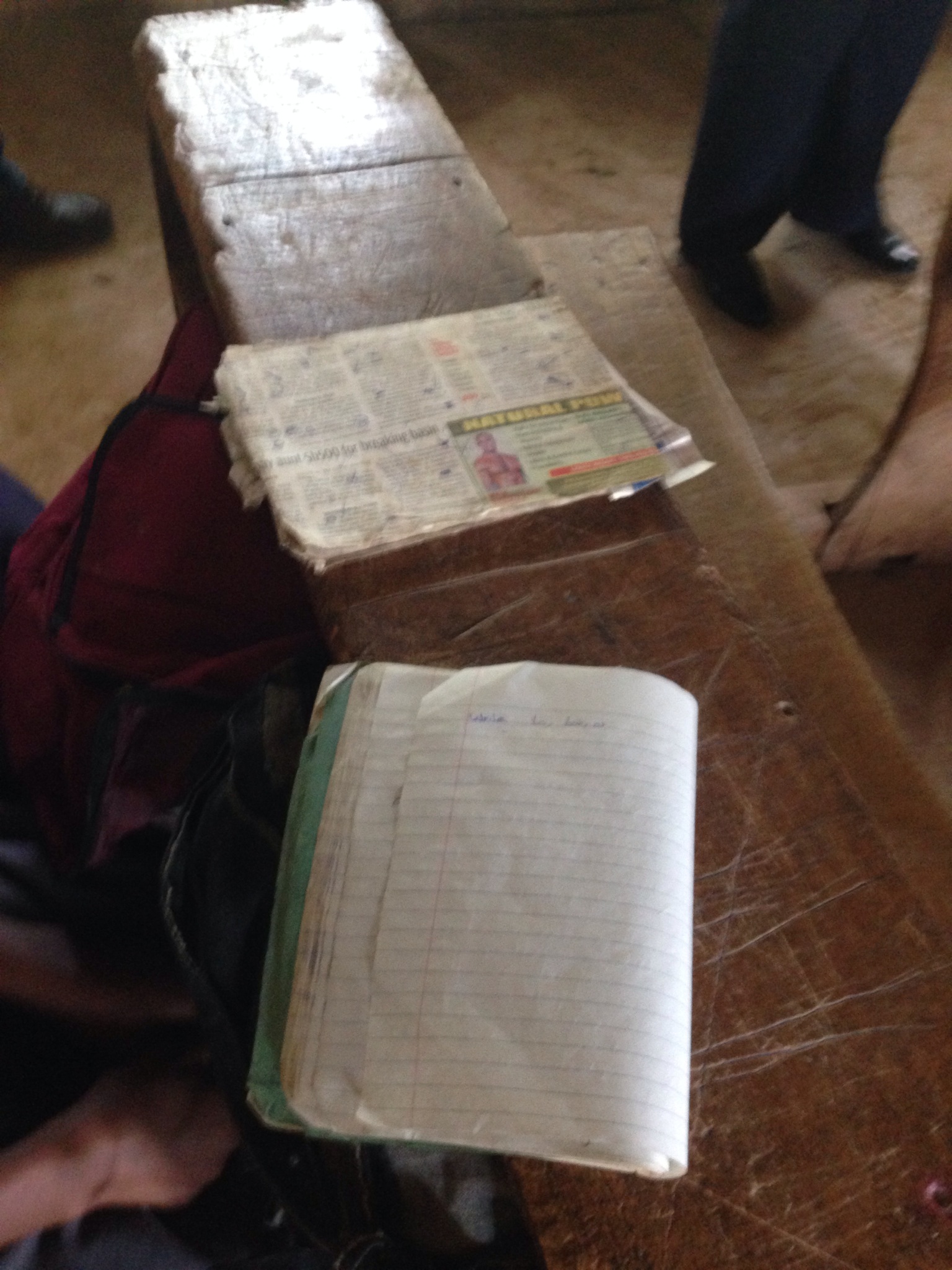
The rooms are not painted but usually have a chalkboard painted square on one end of the room. The children sat 2-4 on a bench. They would usually share a pencil.
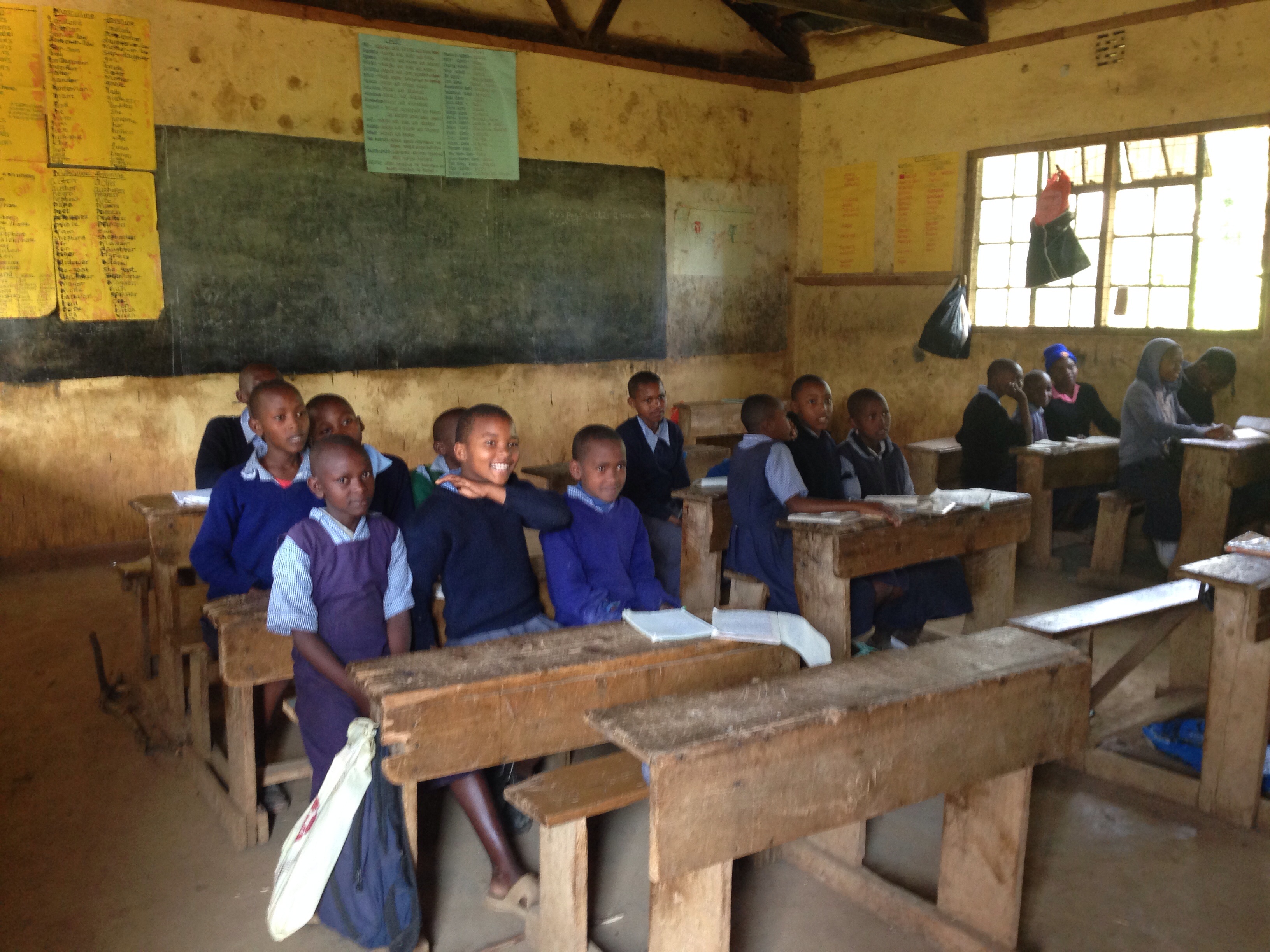
In each classroom, I would eventually put my camera down and scan the room- child by child. The children were shy but extremely curious. Some would giggle, others would cover their eyes in embarrassment. I tried to catch each child’s eyes and then smile or wave. I would usually get a smile back as a reward. But the thing most important to me was to acknowledge and know each child’s eyes, nose, mouth, and expression.
We moved from classroom to classroom. With each room we saw beautiful children. The best part of the deworming was handing out the pills or sweets. It gave us one on one interaction with each child.
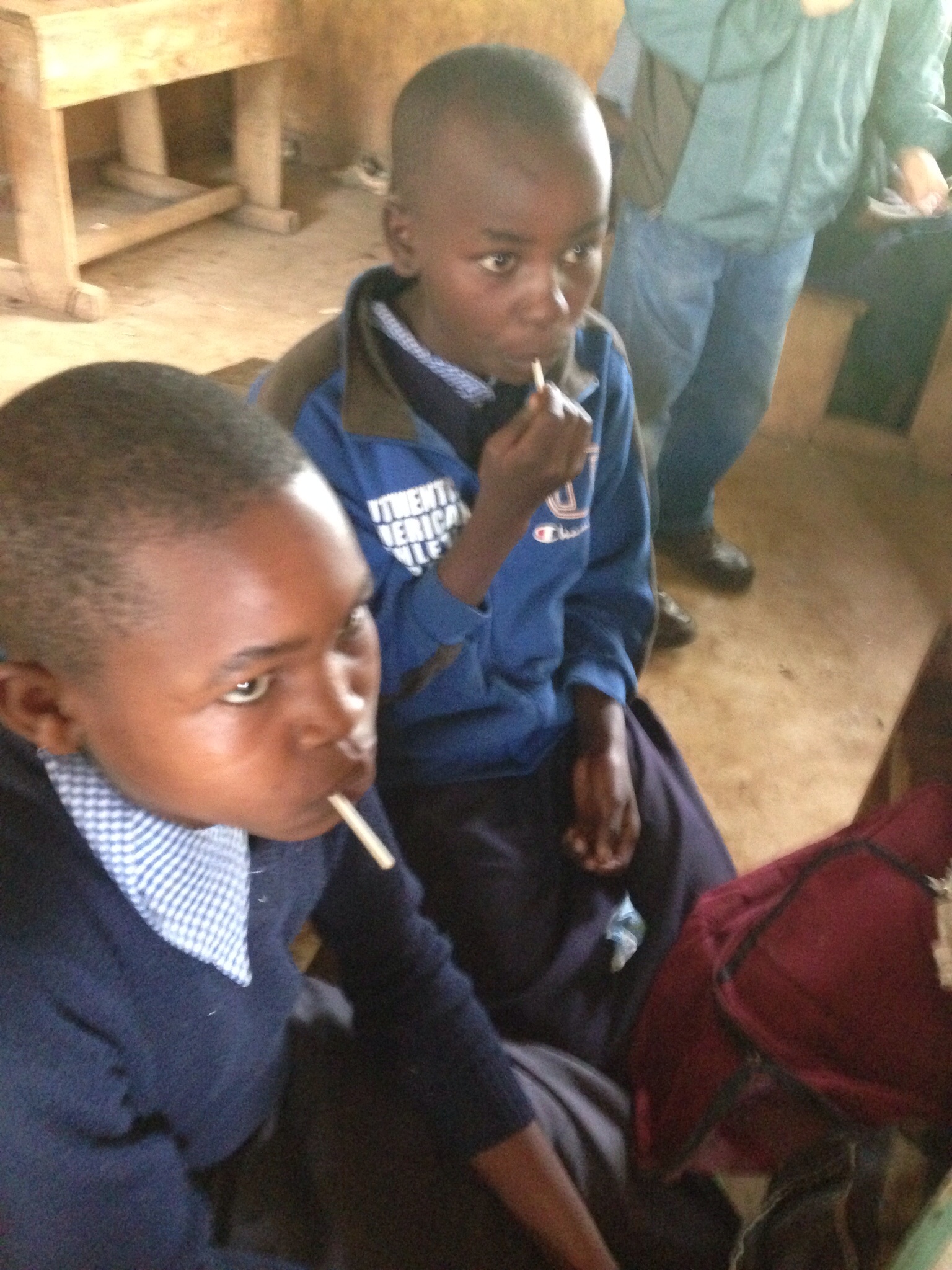
I said “Jambo!” (Hello), or “Karibu” (Welcome). I also liked to look at their books or writing and comment on their studies or writing. Many children sat two to four at a bench. Most shared a pencil.
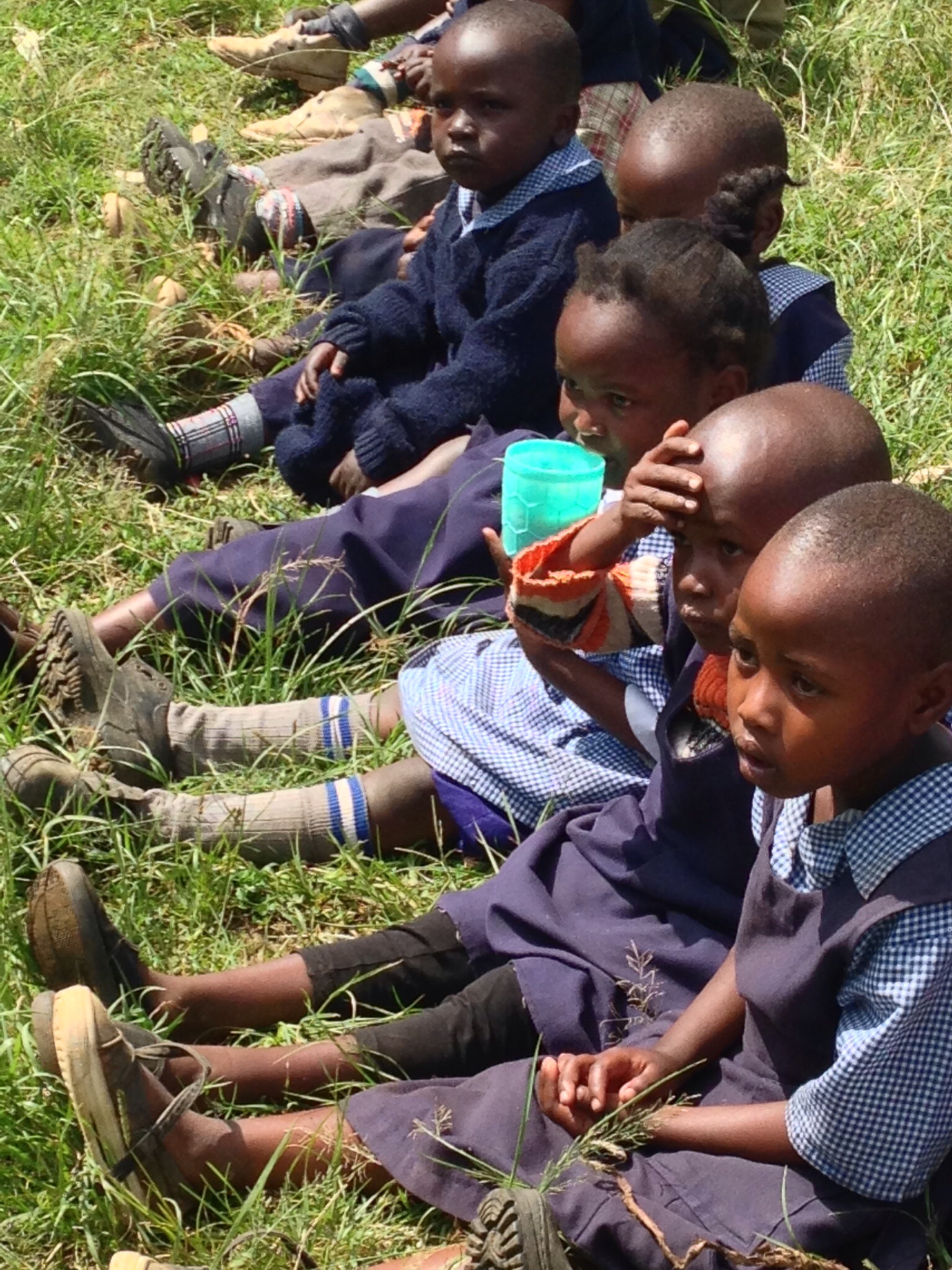
At Uraa, we visited all the children including the nursery kids. The youngest children do not sit in a classroom but meet outside in the lawn. One little girl did not want the pill so cried. It’s a very sweet pill and I can’t imagine how strange they must think it is for us to drop in and hand out pills. But most children understood. The teachers also received a pill and sweet.
Several things struck me:
The nursery children had little cups and stopped for tea.
The restrooms are actually outhouses. I did not want to dare ask to see them but glimpse from one of the windows. Most of the outhouses I’ve seen are just little private holes in the ground. No toilet paper. Nothing.
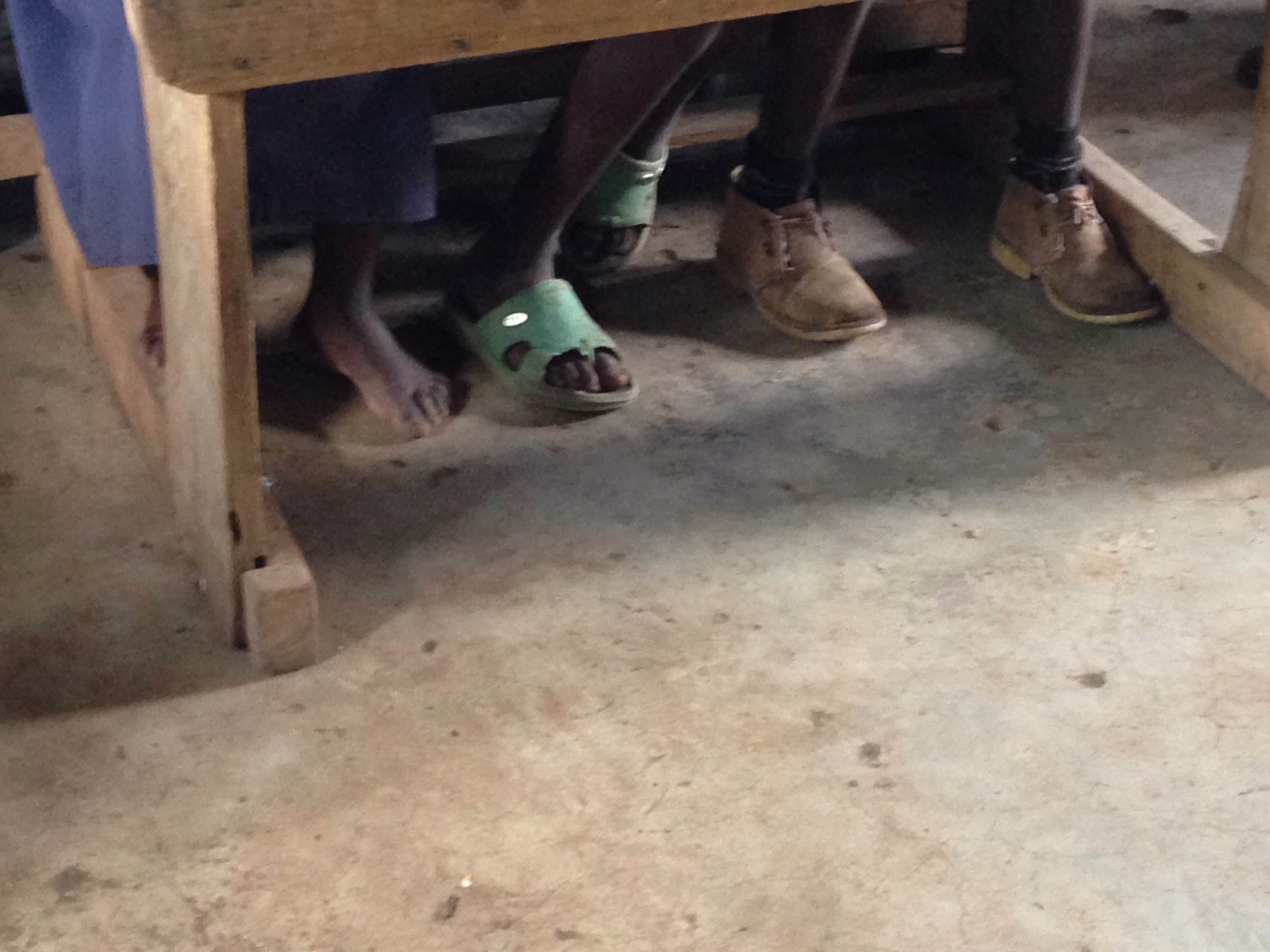
The children all wore uniforms. Uniforms are required at most, if not all, schools in the area. However, not all children wore shoes. They may have walked for miles to go to school without shoes.
After giving the youngest children the meds, the teachers invited us to tea. That was a wonderful chance to ask the teachers questions and vice versa. We spoke to two English teachers. One was a graduate of the school and graduated from school and returned to the place she first learned. Pretty amazing. The teachers break and grade papers in the room where we sat. The teachers sit on the same type of bench as the students.
Tea consisted of Kenyan tea (hot tea with milk- very good and a staple). We also had bananas. The bananas here are wonderful. True banana taste. The ones in the States have a duller flavor. These are packed with flavor. Will miss them.
The teachers for the older children teach specific subjects. They go from classroom to classroom to teach their subject. There were about eight teachers for the school. This means that sometimes classrooms do not have a teacher present. We walked into one such room and the kids sat quietly.
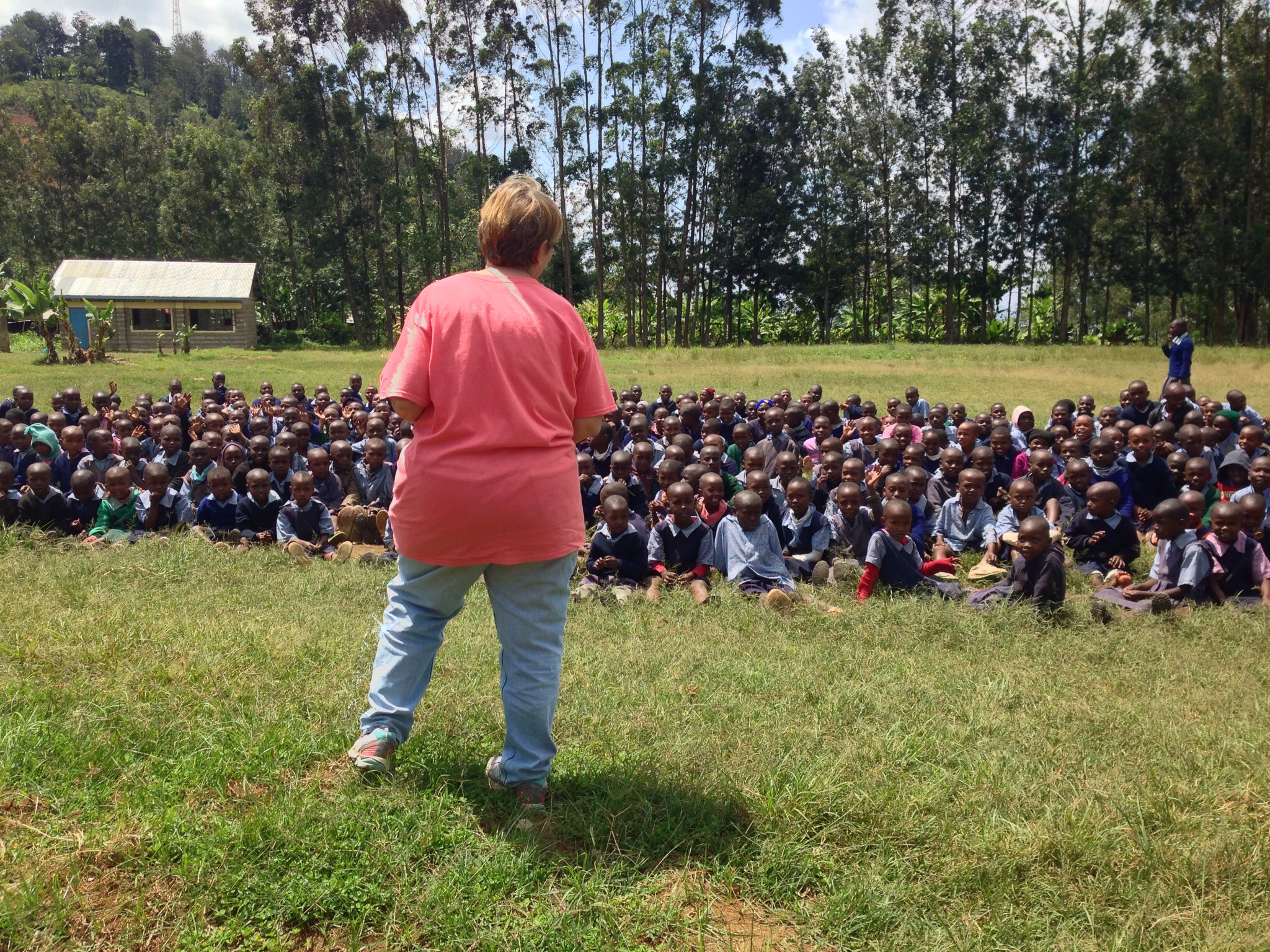
At the end, we presented many school supplies to the entire school who had gathered in a field. We gave a futbal, pump, pens, crayons, paper, and more. We also gave many jump ropes! The biggest hit were the pencils. Yes- pencils!!! The kids roared for the pencils. Tim says that shows the difference in perspective. Doubtful pencils would get the roar in the States.
The group sang for us which was delightful. We didn’t quite understand but we could understand that they were grateful and excited. Sue told them again we were from America (that always received an excited exclamation) why we were there- because Dad and Sue live in Maua and the children are so special and important to them. They told their children about how special and important the children are and we wanted to meet them.
Sue said a prayer which is expected and acceptable at many Kenyan schools. I’ve never been someone who closes her eyes during a prayer as I like to be aware and focused on whatever is being thought or prayed upon. This time was no exception. Though I tried to set an example by closing my eyes- I intently looked at the children. These little ones are blessings. May they be kept safe and healthy.
John- the Social Worker who again guided us- blew bubbles. The children laughed and jumped up and down. They were so excited. Bubbles are something universal- I love to blow them with my nieces. Although universal, many of the children at Uraa may have rarely seen them so there was a different kind of enjoyment.

As we left, the kids wanted to shake our hands, touch us, and dared each other to touch my hair (no one did at Uraa). John said that those who did touch us would have status or bragging rights. I can’t quite describe in words why, but it makes me sad. That somehow they think our skin is special or different. I am the one honored to experience them and shake their hands. They are the beautiful ones.
This is an example of just one school. Many more stories to tell.
 9a Clock
Thanks for sharing your special experiences, Nina! You help us to be there, too!
LikeLike
Nina, thank you so much for continuing to write these wonderful descriptions of the incredible work you and Tim are doing there! I am in such awe!! You are my personal hero now!!!
LikeLike