Infrastructure, or the lack of infrastructure, is a major issue in many parts of Kenya, and Maua is no exception.
For example, the issue of garbage is a problem facing the residents of Kenya. We noticed quite a bit of garbage along the streets and in yards. The garbage in the villages was abundant. No matter where you walked there would be litter bordering the roads or ground into the dirt on the roads.
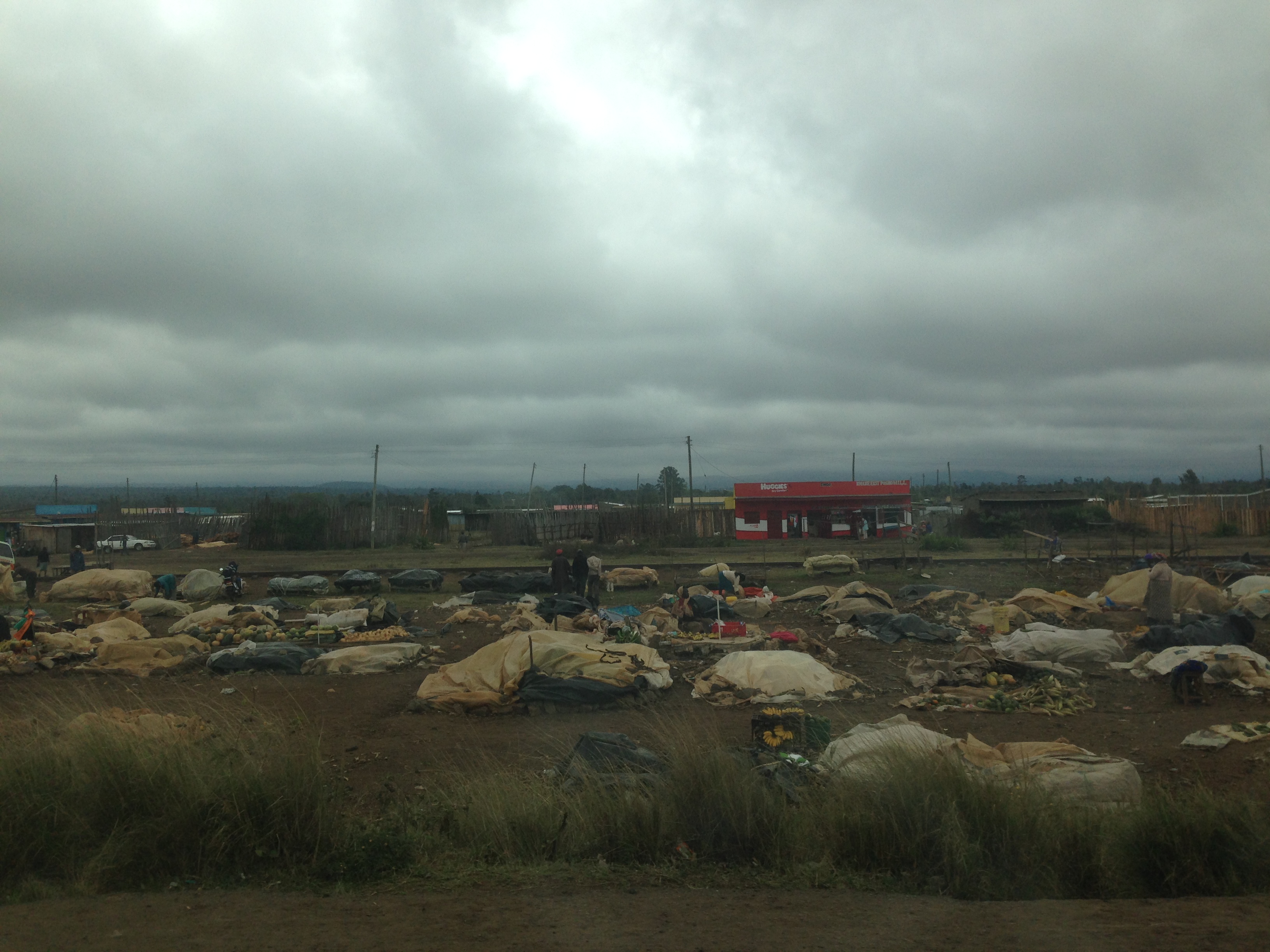
We noticed sometimes children would put the candy wrappers on the ground at the schools. Or sometimes we’d see adults put wrappers or garbage outside the vehicle window. One time, before I could even offer to take someone’s garbage, I saw it fly out the window. Kenya is so gorgeous, it’s hard to understand why anyone would want to litter it with garbage. I don’t think it’s a matter of “want” however, but more a matter of practicality.
A main reason for the problem is: what do you do with the garbage? There are no garbage trucks. There are no landfills. There is no where to put the garbage. There are always the goats that will eat anything and they do, indeed, eat the various garbage. One morning Tim and I saw a cow eating garbage from a large canvas bag left on the road.

There is a story we’ve heard Sue tell from one of the first years she visited the hospital. She asked Stanley if she could get some garbage cans to put around so that people could throw away their garbage. Stanley said, “That’s a great idea. What do you do with the garbage that is thrown in the cans?”
Sue said, “Well, you’ll have someone pick it up.”
Stanley said, “That is a wonderful idea. But, who will pick it up? And where will they put it?” Sue didn’t have answers to the question because there is no one who will pick it up or a place to put all the garbage. Hmmm. Quandary.
Dad, Sue, and many people at the hospital burn their garbage. We also saw several burn piles along the roads in Nairobi or elsewhere. While visiting Dad and Sue’s home, we put compost in one can; washed and reused water bottles and glass soda bottles in another; and everything else in another to be burned. One morning when I was wandering in their yard I discovered the compost hole as well as the burn hole.
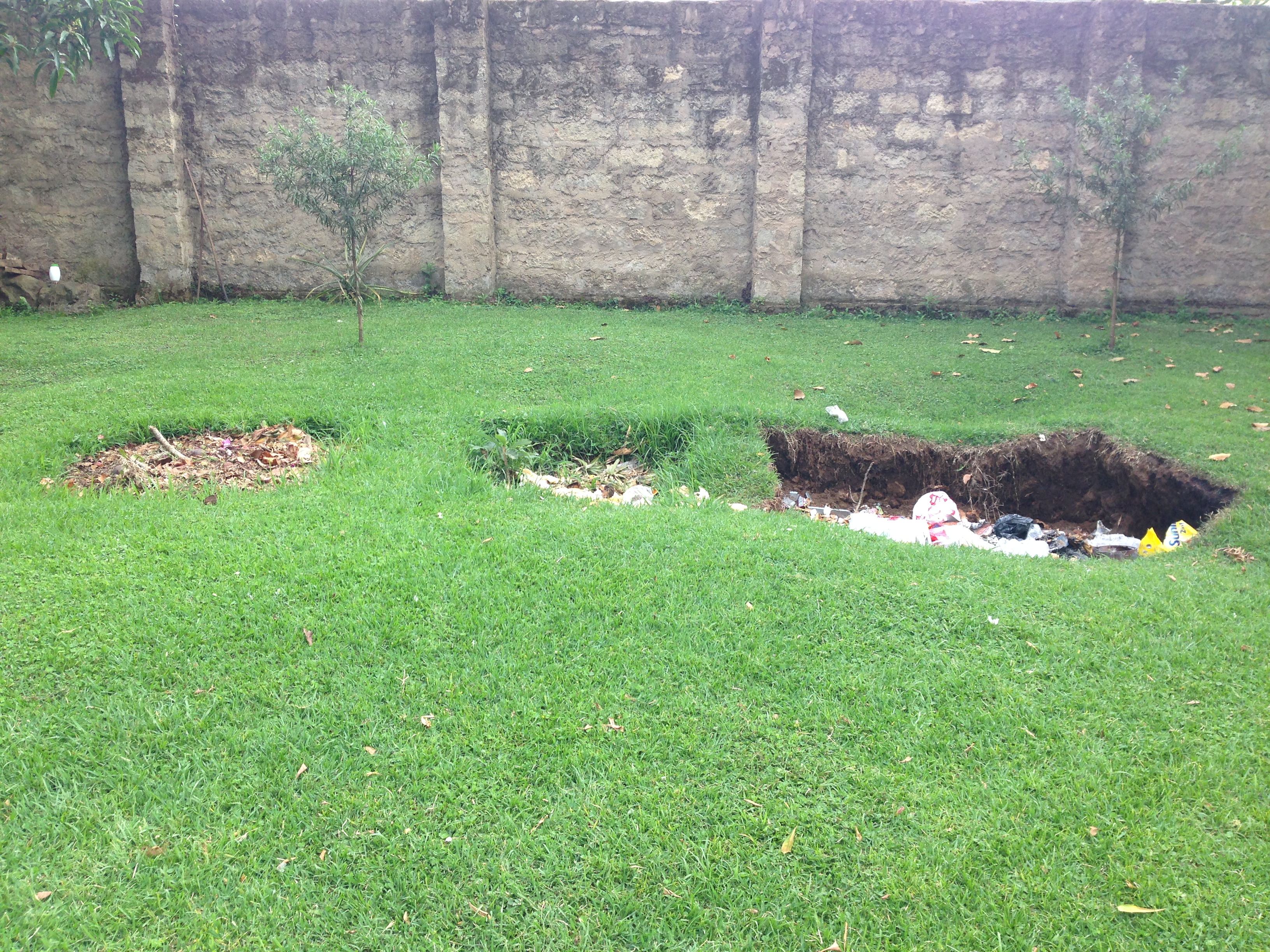
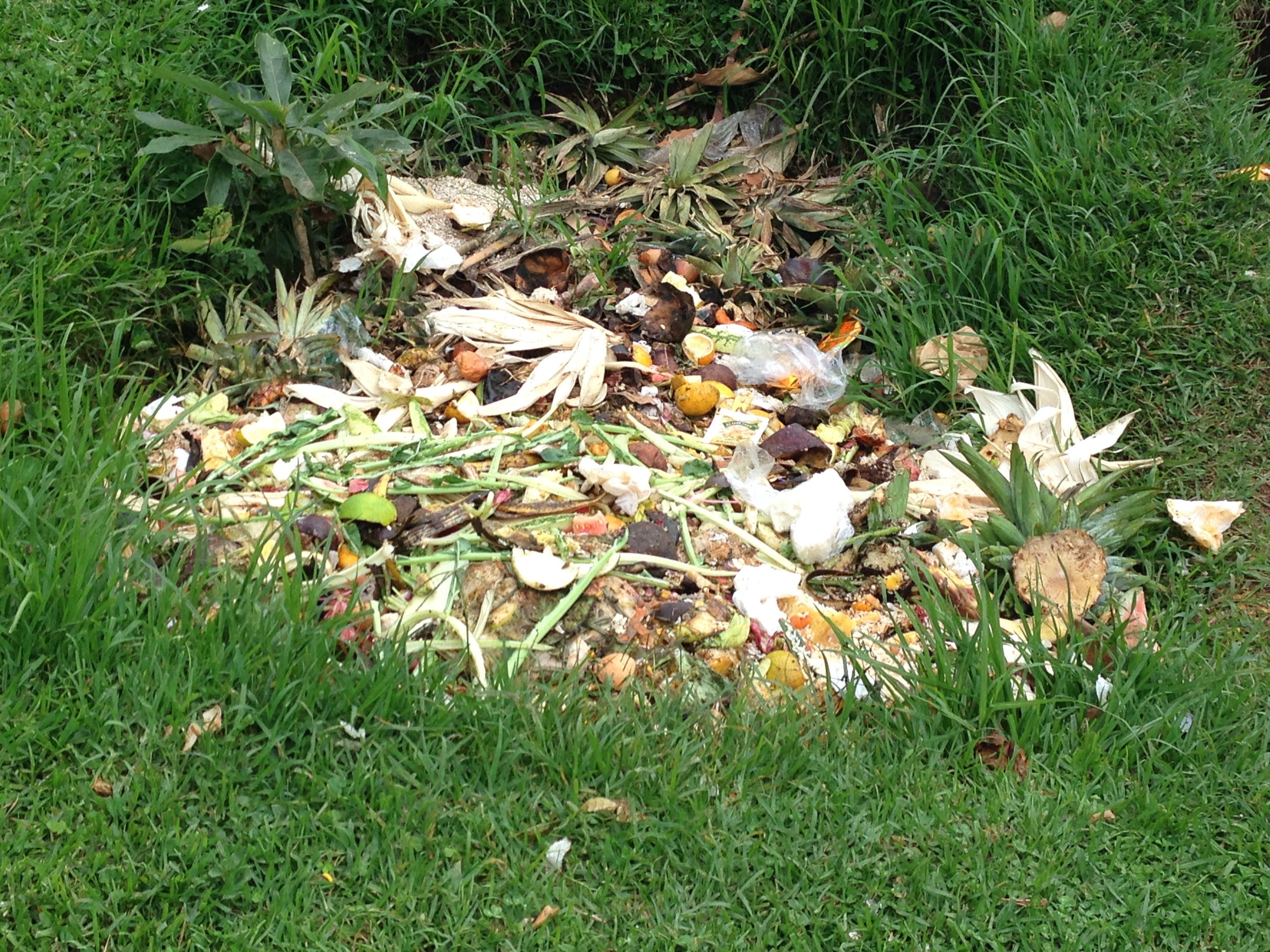
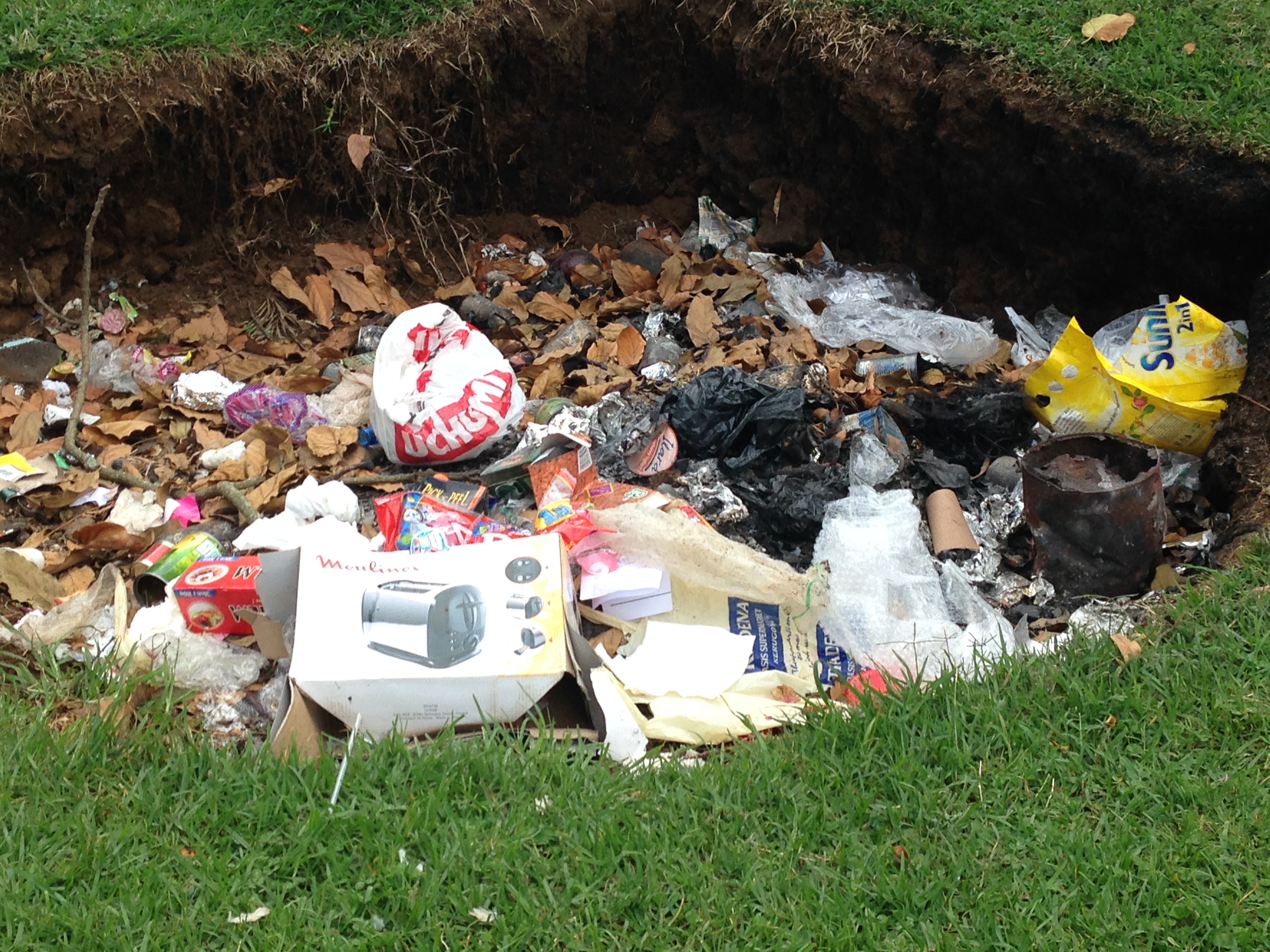
As someone who works in local government, I respect the need for services. I also respect the cost for services- both the cost to government as well as cost to citizens. And if there is no money, there is no solution.


However, on the other hand, at one school we visited the teachers quickly offered a bag to the children where they could put their candy wrapper. The teacher looked at me a bit odd when I was really excited about her garbage bag. They will burn the collected garbage onsite at the school.

We went to a Nakumutt (the big grocery store chain there) and I saw signs encouraging people to bring reusable bags. Progress! This is a step many still need to do in the States!
Lastly, I saw pictures of the Oregon-Idaho UM Team teaching hospital staff and families to knit using yarn and plastic bags that would otherwise be burned or tossed on the roads. Progress!
Just a small observation that has some big implications.
 9a Clock
Interesting observations Nina, how true that this is something we’re so used to living here. “Someone will come and pick it up” of course!
LikeLike